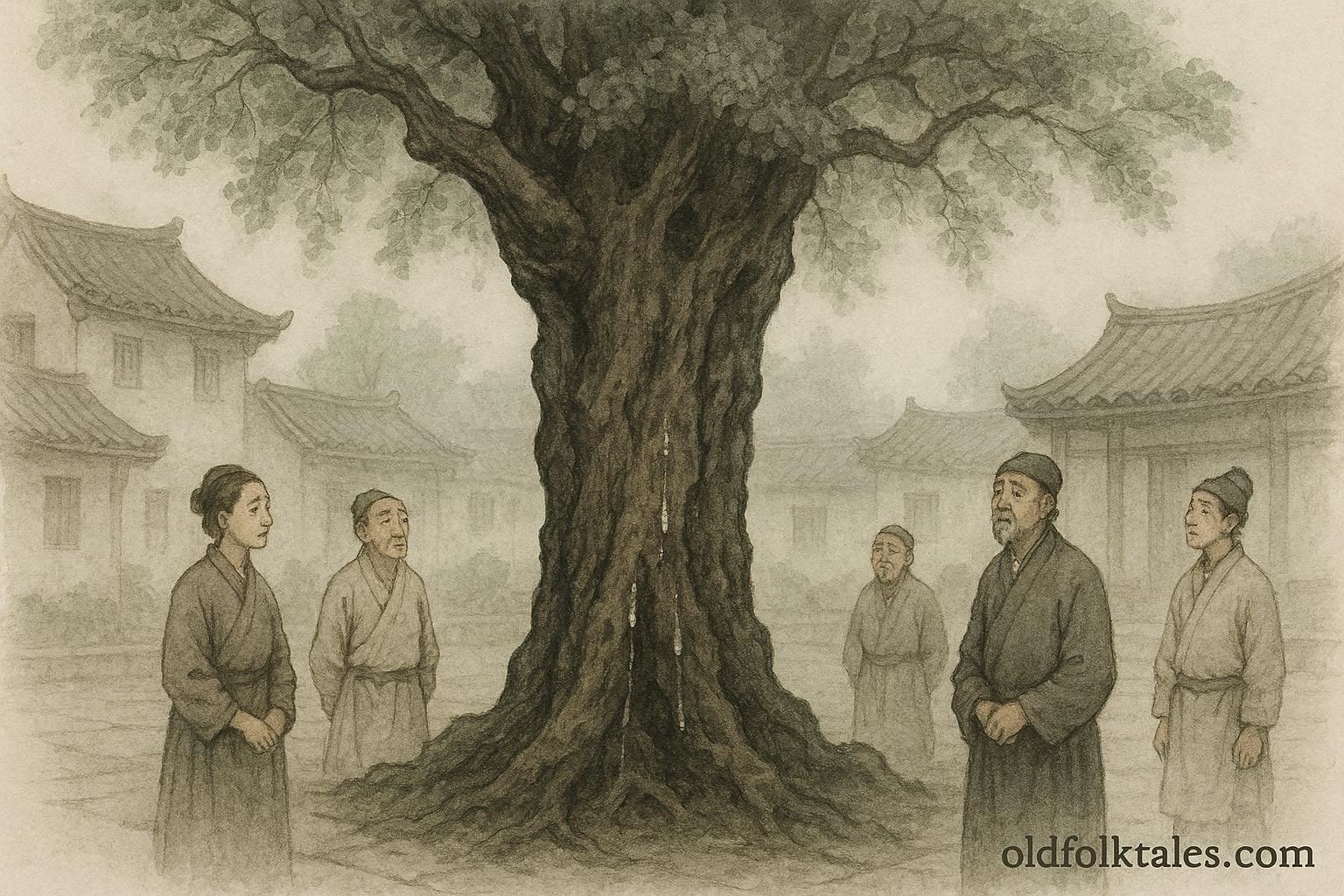
Morning light spread gently over the outskirts of Luoyang, revealing tiled rooftops, narrow paths, and fields edged with mulberry trees. For generations, these trees had fed silkworms and sustained families whose livelihoods depended on silk. Among them stood one mulberry tree older than memory, its trunk thick and twisted, its branches arching like watchful arms over a small communal square. Elders said it had been planted before the founding of the village itself, though no one could name the planter.
Life in the village followed familiar rhythms. Farmers rose before dawn. Women prepared meals and tended looms. Children carried water and recited lessons aloud. At the heart of this order was trust, the belief that fairness governed both human conduct and the unseen forces that shaped fortune.
That belief began to waver during the tenure of Magistrate Qiu. He arrived from the city with polished boots and measured words, promising efficiency and discipline. At first, villagers welcomed him. Yet gradually, complaints surfaced. Land disputes always favored those who paid discreet gifts. Taxes rose without explanation. Those who questioned decisions found themselves fined or detained for vague offenses.
Journey through enchanted forests and islands in our Southeast Asian Folktales collection.
Still, fear kept voices low. Magistrate Qiu commanded soldiers, seals, and written law. The people felt small against ink stamped in red.
One afternoon, as silk workers gathered leaves beneath the ancient mulberry tree, something strange occurred. From a shallow crack in the bark, a thick drop of sap formed and slid downward. It glistened in the sun, falling onto the packed earth below. At first, no one thought much of it. Trees bled sap in warm seasons.
But the following day, more sap appeared. It ran slowly, steadily, staining the bark in winding trails. A child whispered that it looked like tears. Laughter followed, uneasy but dismissive.
Then injustice struck openly. A widowed woman named Madam Shen was accused of underpaying taxes. In truth, she had already paid twice. When she protested, Magistrate Qiu ordered her mulberry grove confiscated. Soldiers arrived before dawn, marking her trees for seizure.
That same morning, villagers found the ancient mulberry tree weeping more heavily than ever. Sap streamed down its trunk, pooling at its roots. Even hardened elders stood in silence. Some knelt instinctively.
Word spread quickly. Whenever wrongdoing occurred, the tree wept. When a bribe was accepted, sap appeared by dusk. When a false charge was recorded, fresh trails marked the bark. When a poor farmer was beaten for delay in payment, the sap flowed thicker still.
Magistrate Qiu dismissed the rumors as superstition. He ordered the square cleared and forbade gatherings near the tree. Yet the tree could not be ignored. Its weeping continued, timed with each abuse of power.
A young clerk named Liang, newly assigned to the magistrate’s office, noticed the pattern. Educated but not yet hardened, he felt unease grow in his chest. He had recorded decisions that troubled him, though he told himself obedience was duty. After witnessing the tree weep following Madam Shen’s case, doubt turned into resolve.
Liang began copying records secretly. He noted dates, rulings, payments, and punishments. Each time Magistrate Qiu accepted an envelope or altered a judgment, Liang marked the moment. Each time, villagers later whispered that the tree had cried.
One evening, during a heavy flow of sap, thunder rumbled faintly though the sky remained clear. Elders interpreted this as warning. They gathered quietly and decided to act not with force but with truth.
During the annual inspection, a senior official from the provincial capital arrived. Villagers prepared offerings and displays as required. Magistrate Qiu planned a grand welcome. Yet before ceremonies began, Liang stepped forward with trembling hands and presented his records. He spoke not as an accuser but as a witness. He described the tree, the timings, the injustices.
Skepticism filled the air until Madam Shen stepped forward. Then others followed. Each told their story calmly. Each pointed to dates that matched Liang’s records. Finally, elders led the official to the mulberry tree. Fresh sap still glistened on its bark.
The official ordered an investigation. Magistrate Qiu protested loudly, calling the villagers ignorant and accusing Liang of betrayal. Yet evidence mounted. Seals were compared. Accounts audited. Soldiers questioned.
By dusk, Magistrate Qiu was placed under guard. As he was led away, villagers later said the mulberry tree ceased weeping. Its bark darkened as sap dried, leaving only faint traces like healed scars.
Justice restored, the village breathed freely again. Taxes returned to fair levels. Confiscated lands were returned. Madam Shen’s grove was replanted with help from neighbors.
The tree never wept again, though villagers continued to visit it with respect. Children were taught its story not as magic alone but as reminder. Nature, they learned, bore witness when human conscience failed.
Over time, officials passing through Luoyang heard whispers of the tree. Some laughed. Others felt uneasy. A few governed more carefully thereafter.
The mulberry tree still stands, silent yet watchful. Its leaves feed silkworms. Its shade shelters meetings. And though it no longer weeps, villagers say that if injustice ever takes root again, the tree will remember how to cry.
Moral Lesson
True justice cannot be silenced forever. When human systems fail, truth finds a voice through conscience, community, and even nature itself. Moral order is preserved when people choose integrity over fear and bear witness together.
Knowledge Check
- Why was the mulberry tree important to the village before the events occurred?
It supported silk production and symbolized continuity and livelihood. - What caused the mulberry tree to begin weeping sap?
Acts of injustice committed within the village. - Who was Magistrate Qiu and why was he feared?
He was the corrupt local authority who abused power and controlled law enforcement. - What role did the clerk Liang play in restoring justice?
He documented corrupt actions and presented evidence during the inspection. - Why did villagers rely on testimony rather than violence?
They believed truth and collective witness would restore moral order. - What happened to the mulberry tree after justice was restored?
It stopped weeping and returned to silent watchfulness.
Source
Adapted from Chinese Academy of Social Sciences Folk Belief Records, 2014.
Cultural Origin
Central Plains ethical folklore.