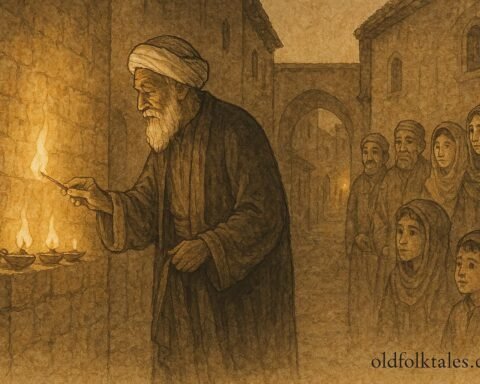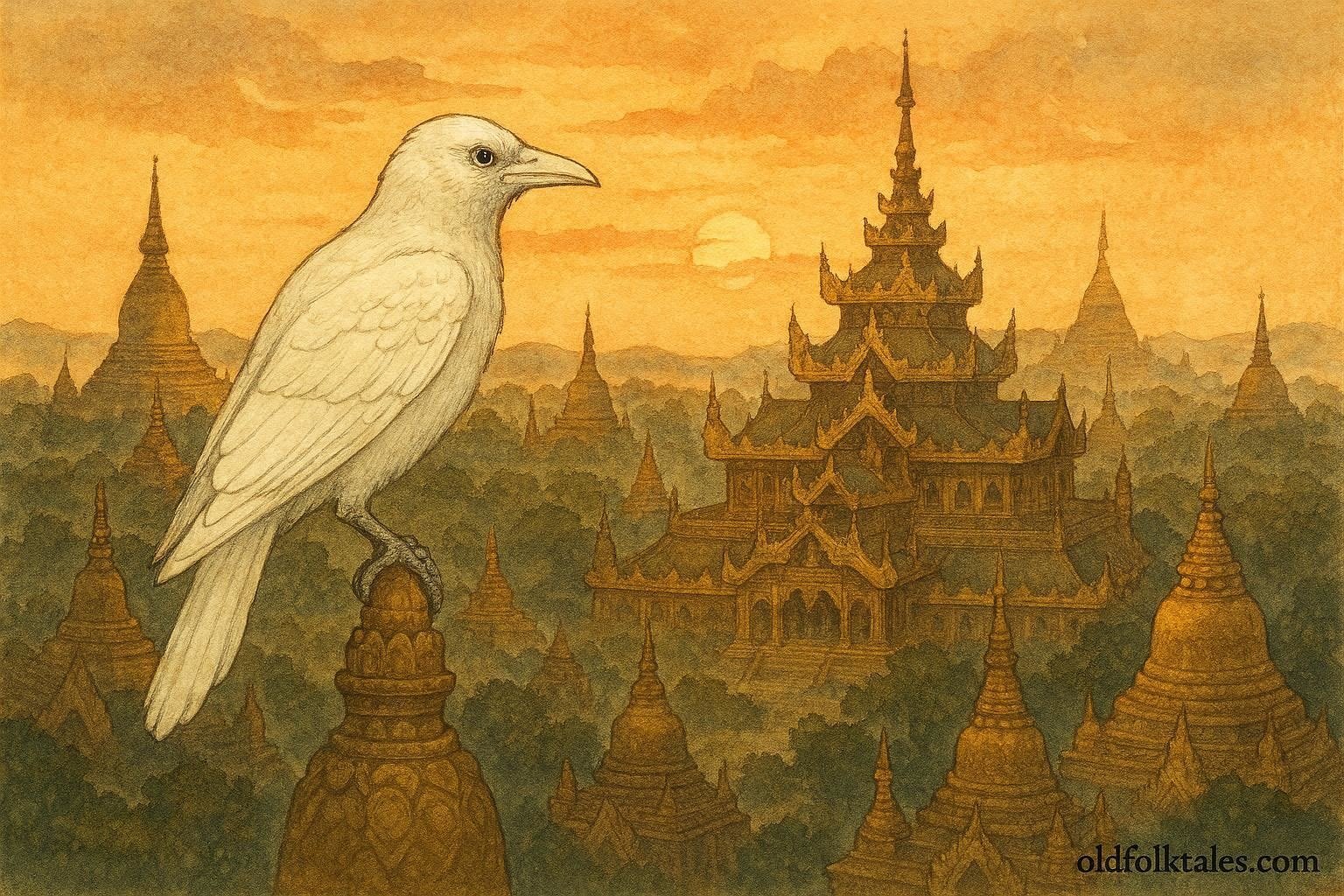
The city of Pagan stood beside the Irrawaddy River, its plains filled with pagodas whose spires caught the sun like flames of gold. Merchants traveled from distant lands, monks debated sacred texts beneath banyan trees, and kings ruled from palaces painted with red earth and lacquered wood. Pagan was prosperous, yet prosperity slowly brought pride. As years passed, justice weakened, taxes grew heavy, and the voices of the poor were ignored.
During one such season of moral decline, a strange event occurred at dawn. A crow with feathers as white as river mist landed upon the highest pagoda near the royal compound. Crows were common in Pagan, but none had ever seen one like this. Its eyes were dark and steady, and its presence silenced the birds around it. Monks paused their chanting. Market women froze with baskets in hand. The white crow called once, its voice sharp yet clear, and then flew toward the palace.
Word spread quickly. Elders whispered that such a bird appeared only when the balance between heaven and earth was broken. Old chronicles spoke of an omen crow sent by higher forces to remind rulers of their duty. Many hoped the king would heed the sign. Others feared he would not.
Discover more East Asian Folktales from the lands of dragons, cherry blossoms, and mountain spirits.
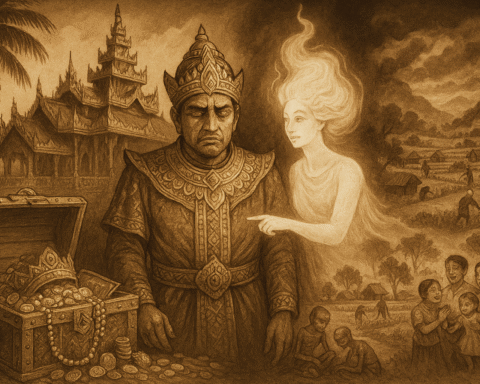
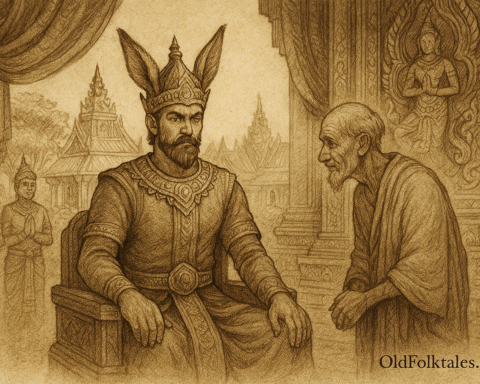
King Thiri Zeya ruled at that time. He had once been generous, but flattery and comfort had dulled his sense of fairness. When courtiers informed him of the white crow, he laughed and dismissed it as superstition. Yet that same day disputes multiplied. A farmer was punished unfairly. A monk was denied alms. The air itself felt heavy.
That evening the white crow appeared again, this time on the palace gate. It stared directly at the king as he passed, unblinking and calm. Though he tried to ignore it, the bird’s gaze unsettled him. That night the king dreamed of Pagan in ruins, pagodas crumbling while the white crow watched silently from above.
Still, pride held him firm. He ordered astrologers to explain the omen away. Some complied out of fear. One elderly monk named U Candima did not. Summoned before the court, he bowed and spoke gently. He said the crow was not a threat but a mirror. It showed rulers what they had become. If justice returned, the crow would depart. If not, decline would follow.
Angered yet shaken, the king dismissed the monk. Days passed and the white crow continued to appear at moments of wrongdoing. It perched above unjust trials. It cried when bribes were taken. It followed tax collectors who oppressed villagers. People began correcting their behavior simply because the bird watched.
At last a famine struck nearby villages. Reports reached the palace that grain stores were full, yet people starved. The white crow appeared inside the palace courtyard for the first time. Guards tried to chase it away, but it did not flee. It hopped calmly toward the throne and spread its wings. In that moment King Thiri Zeya felt the full weight of his failures.
He ordered food released immediately. Taxes were reduced. Corrupt officials were removed. He invited U Candima to advise him and listened without anger. Each just act was followed by a single approving call from the white crow. Gradually the city’s mood changed. Markets grew fair. Courts grew honest. Offerings returned to the monasteries.
One morning after a public ceremony where the king knelt before monks and asked forgiveness, the white crow flew high above Pagan. It circled the pagodas once, then vanished into the sky. It was never seen again.
Chroniclers later wrote that Pagan entered a period of renewed harmony. Kings after Thiri Zeya ruled with caution, remembering the silent witness that once watched them. The story of the white crow was taught not as a tale of fear but as a lesson of guidance. The people believed that when rulers forget humility, signs will always appear, waiting for those wise enough to see.
Journey through enchanted forests and islands in our Southeast Asian Folktales collection.
Moral Lesson:
Leadership carries a sacred responsibility to uphold justice and humility. When power is guided by conscience and compassion, harmony follows. Moral warnings are not meant to threaten but to guide those willing to reflect and change their ways.
Knowledge Check:
- Where did the white crow first appear
Answer: On the highest pagoda in Pagan - What did the white crow symbolize
Answer: A moral warning and divine sign - How did King Thiri Zeya initially react
Answer: He dismissed the omen with pride - Who explained the true meaning of the crow
Answer: The monk U Candima - What changes did the king make
Answer: He restored justice and reduced oppression - Why did the white crow disappear
Answer: Balance and righteousness were restored
Source:
Adapted from Department of Archaeology and National Museum Myanmar Folklore Records, 2013.
Cultural Origin:
Bagan era Burmese court folklore.