
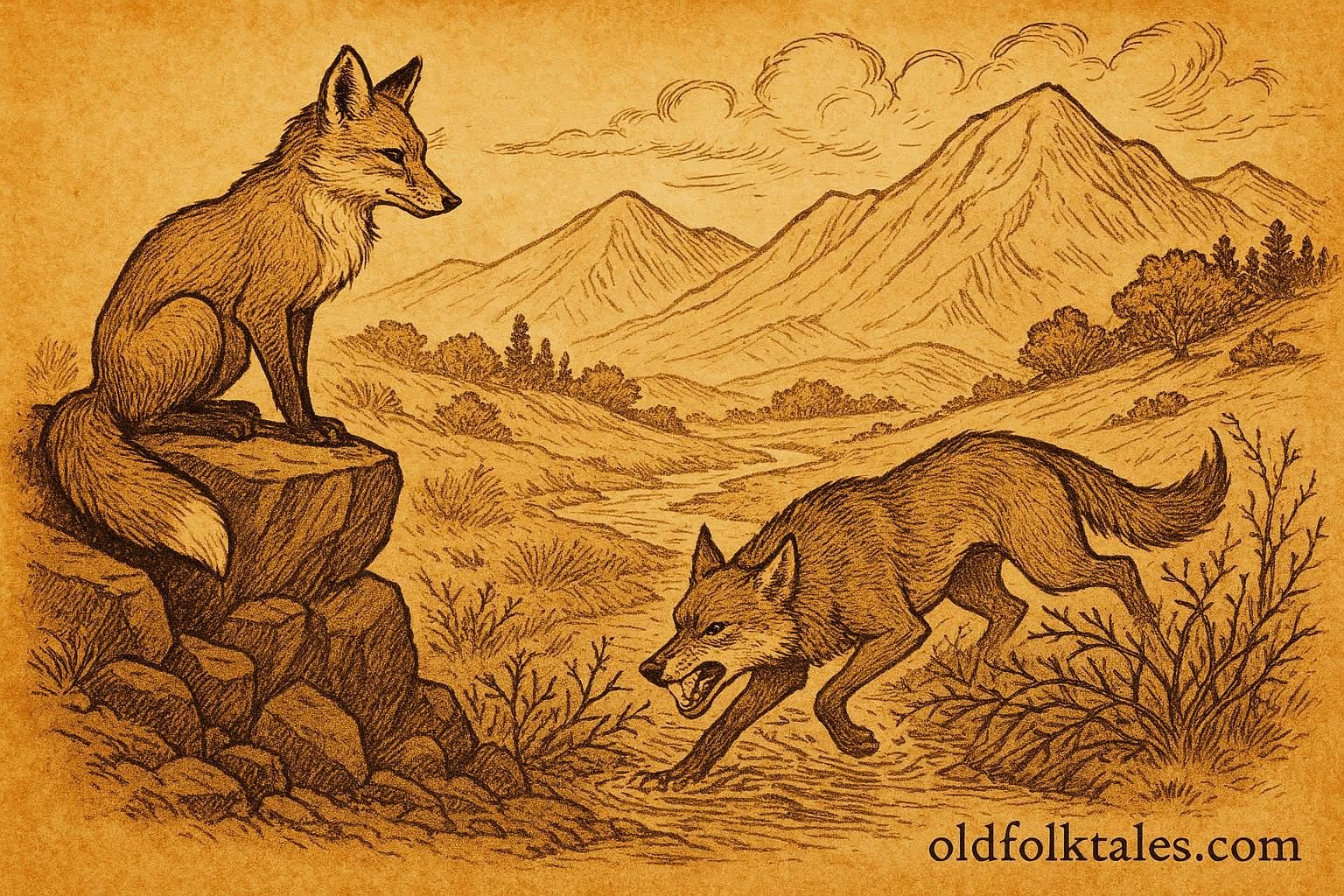
In the shadow of the Spin Ghar mountains, where the valleys were dotted with thorn bushes and the streams glittered under the sun, there lived a cunning fox, known among the creatures of the steppe for its cleverness. Its coat was russet gold, blending perfectly with the grasses, and its eyes glimmered with sharp intelligence.
Not far away, a large wolf roamed the hills. Strong and fierce, he had little patience for subtleties, believing brute strength would always triumph. Yet, his arrogance often left him vulnerable. One afternoon, the wolf spotted the fox resting near a stream and immediately approached.
“Fox,” growled the wolf, his teeth bared, “I see you loafing in my territory. Show me your secret for finding prey or stay out of my way.”
The fox smiled politely, hiding its wariness. “Oh, mighty Wolf, I know of a flock of fat sheep beyond the northern pass. Follow me, and you may feast.”
The wolf’s eyes brightened. He was always eager for an easy meal and trusted the fox, believing that cunning was only valuable when paired with his strength. The fox, knowing the wolf’s gullibility, led him toward the pass.
First, they crossed a shallow stream. The fox leapt gracefully from stone to stone, while the wolf plunged into the water and struggled against the current. Laughing softly to itself, the fox whispered, “The prey awaits beyond the water, but one must first show care and balance.” The wolf, embarrassed but eager, pressed on.
Next, the fox led him through thorn bushes. Each time, the wolf became entangled, pulling branches that scratched and tore at his fur. “Patience is as important as strength,” the fox said lightly, guiding itself effortlessly through the thickets.
Finally, they reached a narrow ravine. The fox pointed to the opposite side. “The flock grazes just beyond. Jump carefully, or the river below will claim you.” Confident, the wolf lunged without thought. He fell short, sliding down the muddy slope and soaking himself in the river below. The fox, perched safely on the other side, shook its head with mock sympathy.
Night fell, and the wolf, frustrated and humiliated, demanded to know where the flock had gone. The fox chuckled. “The true prey, dear Wolf, is wisdom and caution. The strongest body is useless without foresight. Perhaps next time, you will listen before leaping.”
Realizing he had been tricked at every step, the wolf limped home, wet, scratched, and humbled. The fox trotted away, disappearing into the grasses, its clever mind intact and free, proving once more that wit and cunning could outmatch brute strength and arrogance.
From that day, stories of the fox and the wolf spread across the hills and villages. Children were taught that intelligence, patience, and careful planning were just as vital as power or size. The fox became a symbol of cleverness, a reminder that even the mighty could fall when pride overcame sense.
Moral Lesson
Cunning, intelligence, and patience can outsmart brute strength and arrogance. Wisdom and cleverness are often more powerful than sheer force.
Knowledge Check
1. Who are the main characters in the story?
A clever fox and a strong but arrogant wolf.
2. What cultural values does the tale highlight?
Patience, cleverness, humility, and careful planning, reflecting Pashtun folklore emphasis on wisdom and social intelligence.
3. How does the fox outsmart the wolf?
By leading him through tricky terrain, using the wolf’s pride and impatience against him, and avoiding direct confrontation.
4. What does the wolf symbolize in the story?
Arrogance, reliance on brute strength, and the dangers of ignoring careful thought.
5. How do the traps and challenges serve the story?
They demonstrate that cleverness and strategy can overcome physical power and highlight the consequences of impulsive behavior.
6. Why is this story significant in Afghan–Pashtun folklore?
It teaches practical wisdom, patience, and strategic thinking, essential traits valued in steppe and mountain societies.
Source: Adapted from SOAS translated folk tales.
Cultural Origin: Afghanistan–Pakistan (Pashtun Region)








