In the flat expanses of Qatar, where the desert stretches wide and the land itself becomes a record of memory, there rises a modest hill known as Umm Al Shuwai’kh. To a traveler, it may appear unremarkable, yet to those who live nearby, its name carries a story older than any written map. It is a name spoken with respect, for it remembers an old woman whose actions, performed in a time of hardship, became bound to the earth itself.
Long ago, when settlements were smaller and survival depended upon wells, grazing paths, and the mercy of the seasons, a period of great difficulty came upon the people of the region. Some say it was a famine brought by relentless drought. Others recall a time of tribal conflict, when fear and uncertainty spread across the land like a hot wind. Water grew scarce, and the safety of wells became a matter of life and death.
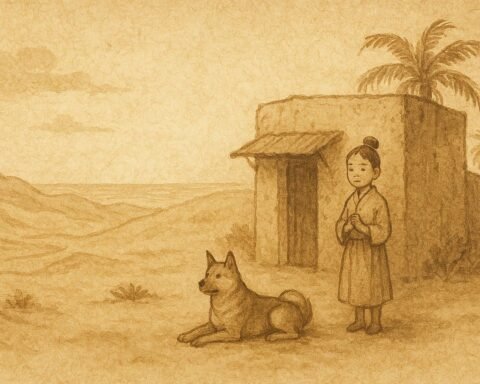
Near the hill that would later bear her name lived an old woman. She was not wealthy, nor was she a leader of men. Her strength lay in endurance, in faith shaped by years of hardship. She knew the land well, every rise and hollow, and she understood what the people needed most in times of crisis.
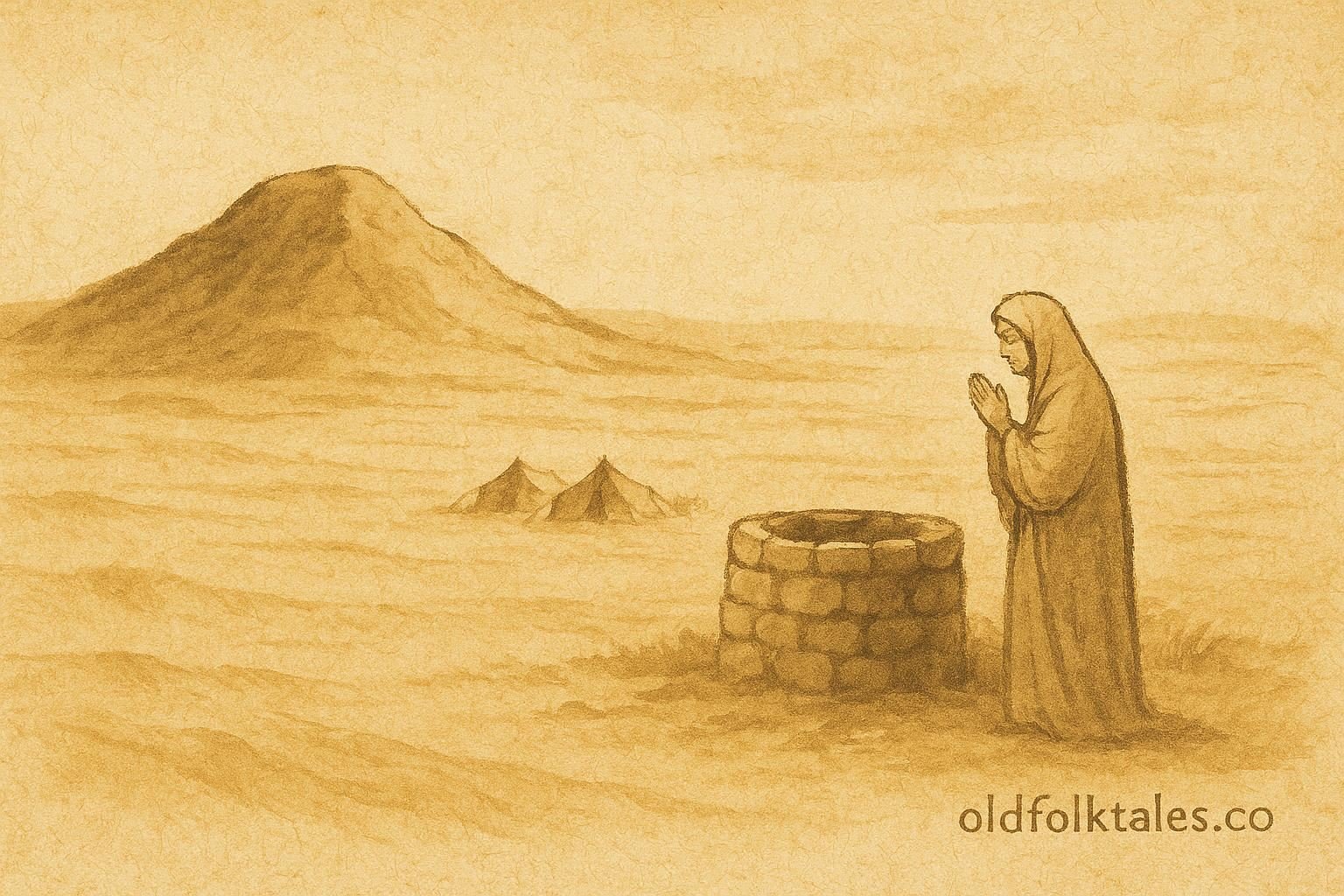
When danger threatened the well near the hill, the heart of the settlement, the old woman acted. Whether the threat came from armed men seeking control or from desperation caused by hunger, the result was the same. If the well were lost, the community would suffer beyond recovery. While others hesitated, uncertain or fearful, she stepped forward.
Some versions of the story say she stood guard at the well, refusing to move, her presence a challenge to anyone who would harm it. Others say she climbed the hill and prayed through the long hours of the day and night, asking for rain and relief with unwavering faith. In all tellings, her action was rooted in devotion to her people and trust in what was right.
The sun passed overhead, and the wind carried her voice across the open land. Those who watched from a distance saw not weakness but resolve. Her courage or piety, or both, marked the moment. The danger passed. Rain eventually came, or the conflict subsided. The well remained in the hands of the community.
When the crisis ended, the people looked upon the hill differently. It was no longer just a rise of stone and sand. It had become a witness. They began to call it Umm Al Shuwai’kh, the place of the old woman, so that her deed would not fade into silence.
As years turned into generations, the name endured. Children learned it before they understood its meaning. Elders told the story in quiet gatherings, pointing toward the hill as proof that the land remembers those who act with courage and faith. The name fixed her memory into the geography itself, ensuring that no written record was required.
In Qatar, where many places carry names tied to events, people, or virtues, Umm Al Shuwai’kh stands as a reminder that history lives in the ground beneath one’s feet. The old woman’s identity mattered less than her action. She became a symbol of what sustains a community when resources are few and fear is great.
The hill remains, unchanged in form but rich in meaning. Travelers may pass without noticing, but those who know the story understand that it is not height or beauty that gives a place its power. It is the memory of human values impressed upon it.
Moral Lesson
This folktale teaches that acts of courage, faith, and devotion do not vanish when time passes. When communities honor such deeds, they preserve their values by weaving them into the landscape itself.
Knowledge Check
-
What is Umm Al Shuwai’kh?
It is a real hill in Qatar named after an old woman remembered for her virtuous action. -
Who is the central figure in the legend?
An old woman who acted with courage or faith during a time of crisis. -
What kind of hardship does the story describe?
A period of famine, drought, or tribal conflict threatening community survival. -
Why was the well important in the story?
It was essential for water and survival, making it a symbol of communal life. -
What does the place name Umm Al Shuwai’kh represent?
It encodes memory, honoring virtue by attaching it to the land. -
What cultural tradition does this story reflect?
The Qatari practice of preserving history and values through place names.
Source: Adapted from the Qatari toponymic legend of Umm Al Shuwai’kh (أم الشعيشخ), preserved in the Qatar National Library Oral History Archive and discussed in academic studies of Qatari place names by researchers including Kaltham Al-Ghanim.