
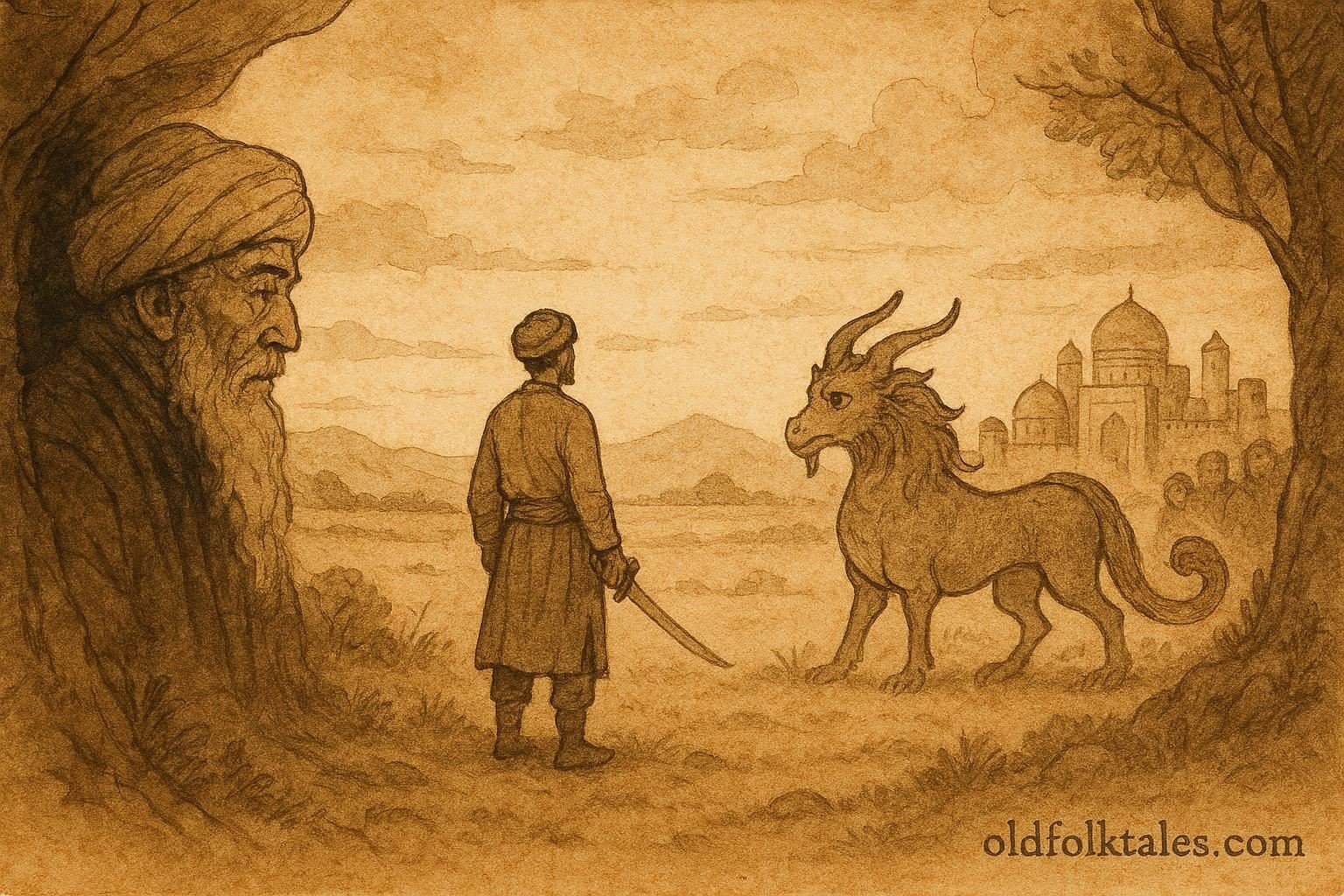
In the wide lands of Uzbekistan, where desert steppes meet ancient towns and the wind carries the memory of caravan bells, there lived a young man named Ziad Batar. He was not born into royalty, nor did he inherit great wealth. Yet among his people, Ziad was known for his upright character, steady courage, and quiet humility. Elders trusted his word, and travelers spoke of his fairness long after passing through his village.
At that time, the kingdom was ruled by an aging king whose strength was failing. The king knew that the future of the land depended not on noble blood alone, but on the virtue of the one who would rule next. Determined to choose a successor worthy of the throne—or the hand of his daughter, according to some tellings—he declared a challenge: three trials would be set, and only one who passed them all would be deemed worthy.
Young men from across the land gathered, drawn by ambition and promise. Ziad Batar joined them, not out of hunger for power, but because he believed leadership was a responsibility that demanded integrity. His calm presence contrasted with the boastful claims of others, yet his resolve was unshaken.
The first trial tested courage. Beyond the city walls lay a desolate region where a magical creature had long terrorized travelers. The king commanded that each contender face this being. Many hesitated, their confidence dissolving in the face of danger. Ziad stepped forward without bravado. Armed with determination rather than arrogance, he journeyed into the wilderness. When the creature emerged, fierce and unnatural, Ziad did not flee. He stood firm, using both strength and restraint, overcoming the beast not with cruelty, but with bravery guided by reason. He returned victorious, earning murmurs of respect.
The second trial examined intelligence. The king summoned Ziad and the remaining contenders before his court and presented a riddle, layered with hidden meanings meant to confuse the impatient. Some answered too quickly; others argued endlessly. Ziad listened in silence. He considered the wisdom of elders, the patterns of nature, and the lessons learned from his travels. When he finally spoke, his answer revealed clarity and insight. The riddle was solved—not by clever tricks, but by thoughtful understanding. The court fell silent, recognizing true wisdom.
The third trial was the most subtle. Unlike the others, it carried no weapons or riddles. Ziad was sent alone among common villagers, disguised and unannounced. He was tested through daily interactions: how he treated the poor, how he spoke to elders, how he responded when faced with temptation or dishonesty. Some sought to deceive him; others asked for help. Ziad gave fair judgment, honest labor, and kind words. He neither sought praise nor advantage. Unbeknownst to him, the king’s observers watched closely.
During this time, Ziad received guidance from a wise elder, and in some tellings, quiet aid from a supernatural helper who appeared at moments of doubt. These figures did not grant him victory, but reminded him to remain true to his values. Ziad listened, learning that strength without virtue leads only to ruin.
When the trials ended, Ziad was summoned back to the palace. The king rose slowly from his throne and addressed the assembly. He spoke not of Ziad’s strength alone, nor solely of his intellect, but of his honesty, humility, and compassion. The king declared that leadership earned through virtue was stronger than any crown inherited by birth.
Before the gathered people, Ziad Batar was named the rightful successor, or in some traditions, granted the hand of the king’s daughter and a place among the rulers of the land. Celebrations followed, filling the streets with music, feasting, and gratitude. The people rejoiced, knowing that their future rested in steady hands.
Ziad did not rule with pride. He remembered the trials and governed with fairness, wisdom, and courage. His name endured, carried by storytellers as an example of what it means to be truly worthy.
Moral Lesson
This tale teaches that true leadership is earned through courage, wisdom, and moral integrity. Power and honor belong to those who serve others with humility and virtue.
Knowledge Check
1. Who is Ziad Batar?
A young hero whose character and integrity define his journey.
2. What are the three trials Ziad must face?
A test of courage, a test of intelligence, and a test of honesty and virtue.
3. Why does the king create the trials?
To find a worthy successor based on character, not birthright.
4. How does Ziad defeat the magical creature?
Through bravery guided by reason, not cruelty.
5. What makes the third trial unique?
It secretly tests everyday morality among common people.
6. What cultural values does the story reflect?
Virtue-based leadership, humility, wisdom, and courage in Uzbek folklore.
Source: Collected from Uzbek oral epics; cited in Uzbek Folk Tales anthologies
Cultural Origin: Uzbekistan (Uzbek folk tale)








